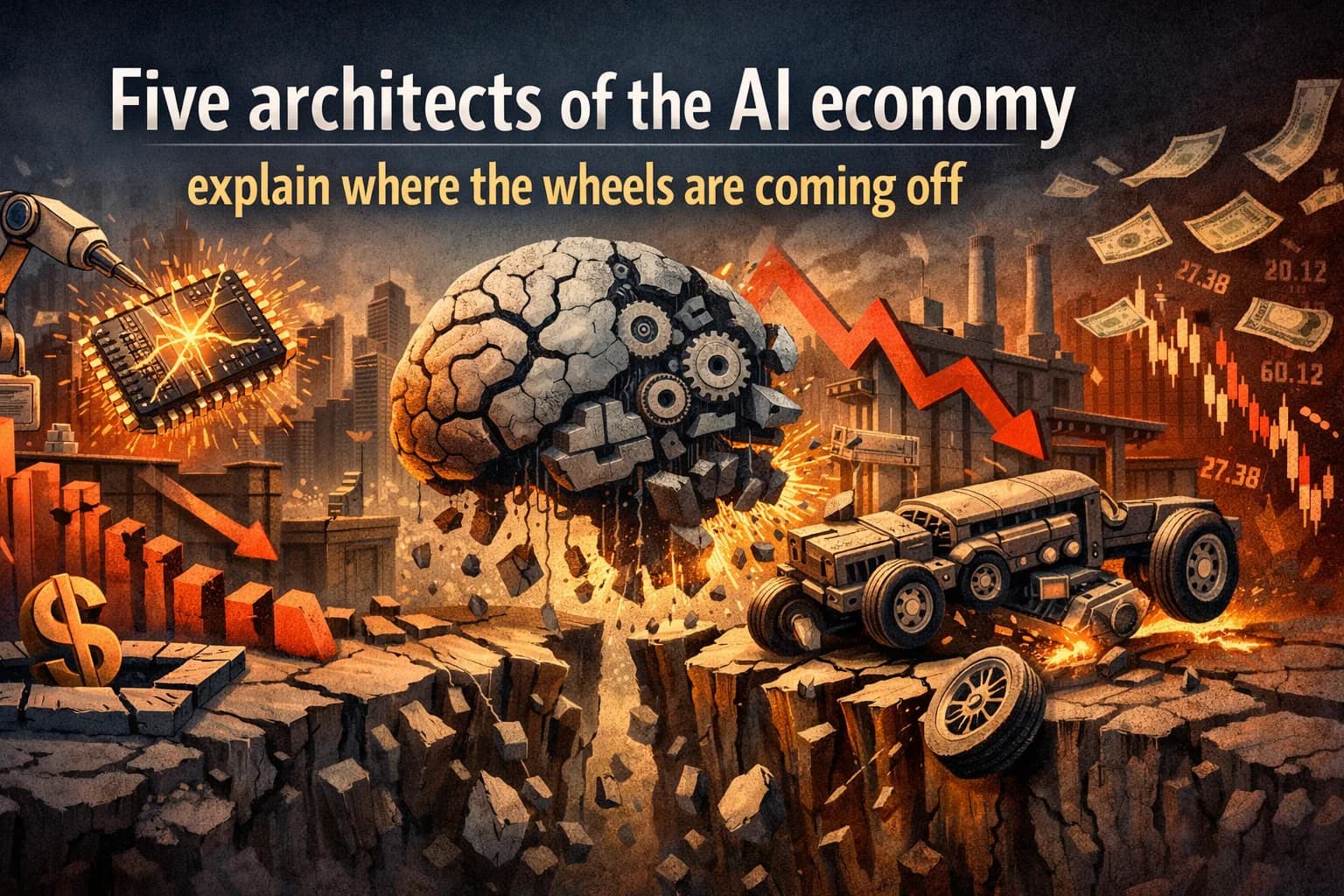
Five architects of the AI economy explain where the wheels are coming off
Recent discussions among industry leaders reveal a growing consensus on the pressing issues facing artificial intelligence development. Indeed, five architects of the AI economy explain where the wheels are coming off, bringing vital concerns to the forefront. These experts, who have shaped the very foundation of the AI landscape, are now openly addressing its vulnerabilities. Their insights provide a much-needed reality check for an industry often characterized by boundless optimism. We must pay close attention to their warnings. This helps ensure sustainable growth.
The conversation goes beyond mere technical hurdles. Instead, it delves into ethical dilemmas, economic implications, and the very societal fabric. For example, issues of bias in algorithms are becoming increasingly apparent. Concerns about the concentration of power among a few tech giants are also rising. Therefore, understanding these challenges is critical. It shapes how we govern and integrate AI into our lives. This dialogue represents a significant shift from the typical narratives of AI's limitless potential.
This deep dive into AI's growing pains is crucial for several reasons. Primarily, it informs policy makers about potential regulatory gaps. Furthermore, it encourages developers to adopt more responsible practices. Above all, it educates the public about the true state of AI. This means fostering a more informed and nuanced understanding. It moves past sensational headlines. Consequently, their collective wisdom offers a roadmap for navigating the complex future of AI. Their frank assessments highlight the need for immediate, collective action across various sectors.

 #Technology #AI #TechTrends #FutureofAI #AIChallenges
Why the Wheels Are Coming Off: Key Challenges Identified by AI Architects
The architects of the AI economy point to several systemic weaknesses. These are threatening to derail progress. One major concern revolves around the lack of robust governance frameworks. Governments worldwide struggle to keep pace with rapid technological advancements. Consequently, regulatory vacuums emerge. This allows unchecked development in sensitive areas. Meanwhile, the sheer complexity of AI systems makes oversight difficult. Developers face a challenge in predicting all potential impacts. This contributes to uncertainty in the field. Another critical area of vulnerability is the ethical deployment of AI. In fact, experts highlight the pervasive issue of algorithmic bias. Training data often reflects existing societal prejudices. As a result, AI systems can perpetuate or even amplify these biases. This leads to unfair outcomes in areas like hiring, lending, and criminal justice. Furthermore, transparency in AI decision-making remains elusive. Users often do not understand why an AI made a particular choice. This lack of explainability erodes public trust. Therefore, addressing these ethical dimensions is paramount. The economic implications also draw significant concern. This means a potential for widespread job displacement. Automation, powered by advanced AI, could render many traditional roles obsolete. While new jobs may emerge, the transition period could be disruptive. Moreover, the concentration of AI power in a few large corporations presents a monopoly risk. These firms control vast data sets and computing resources. They also influence the direction of research. This limits competition. It also stifles innovation from smaller players. That said, this centralisation of power is a real threat to a diverse AI ecosystem.Examining the Flaws in the AI Economy's Foundation
One fundamental flaw lies in the current data infrastructure. Large volumes of high-quality data are essential for training AI models. However, much of this data is proprietary or siloed. This limits access for independent researchers and startups. Consequently, innovation becomes concentrated within a few well-resourced entities. Furthermore, data privacy concerns continue to mount. Balancing data utilization with individual rights is a complex challenge. This unresolved tension affects public acceptance and regulatory efforts. We must find better ways to share data responsibly. Still, another weakness stems from the sheer energy consumption of advanced AI models. Training large language models, for example, requires enormous computational power. This translates to significant energy usage. The environmental footprint of AI is a growing concern. Furthermore, this high cost of training makes cutting-edge AI inaccessible to many. Only entities with substantial financial backing can afford it. This creates an uneven playing field. Above all, sustainable AI development needs to become a priority for everyone.Ethical Quandaries and the Human Element in AI's Future
The ethical quandaries surrounding AI are deepening, touching upon profound human questions. For this reason, the architects are pushing for more human-centered design principles. The issue of autonomy, particularly in AI-driven weaponry, presents a moral minefield. Delegating life-or-death decisions to machines raises serious ethical questions. There is a strong global call for regulations against autonomous lethal weapons. This shows a collective concern. We need to define the boundaries of AI's decision-making capabilities clearly. Moreover, the impact of AI on human cognition and social interaction is becoming clearer. Algorithms curate our information feeds. They influence our choices. This can lead to echo chambers and polarization. In addition, the rise of deepfakes and generative AI challenges our perception of reality. Distinguishing truth from fabrication becomes increasingly difficult. Consequently, this erodes trust in media and institutions. Addressing these societal effects requires interdisciplinary solutions. It cannot be solved by technology alone. Thoughtful implementation is crucial. The debate around consciousness and artificial general intelligence (AGI) also continues. While AGI remains largely theoretical, its potential implications are vast. Even so, the mere pursuit of AGI raises questions about what it means to be human. Experts argue for caution and careful consideration before such advanced systems are developed. They advocate for ethical guardrails and public discourse. This ensures that humanity’s values remain central. Ultimately, the human element must guide AI's evolution. We cannot simply defer to technology.Operational Faults and Scaling Challenges Facing the AI Economy
Operational faults present significant roadblocks for widespread AI adoption. This means that scaling AI solutions often encounters unexpected difficulties. Deployment in real-world environments is far more complex than laboratory settings. For example, integrating AI into legacy systems can be technically challenging. It requires significant investment in infrastructure and training. Many organizations are unprepared for this transition. They struggle with the practicalities of implementation.- **Data Quality and Availability:** Poor data quality directly impacts AI model performance. In fact, biased, incomplete, or incorrectly labeled data leads to unreliable outputs. Ensuring continuous access to clean, relevant data for retraining models is a persistent operational challenge. Many companies underestimate this ongoing need for data governance.
- **Talent Gap and Skill Shortages:** The demand for skilled AI professionals far outstrips supply. This means organizations struggle to find experts in machine learning engineering, data science, and AI ethics. The lack of qualified personnel hampers development and deployment efforts, slowing down innovation across sectors.
- **Interoperability and Standardization:** A lack of common standards across different AI platforms and tools creates fragmentation. Consequently, integrating diverse AI components from various vendors becomes complex and costly. This hinders seamless data flow and collaborative development, creating compatibility headaches for users.
- **Security and Privacy Risks:** AI systems are vulnerable to new forms of cyberattacks, including data poisoning and adversarial attacks. Furthermore, managing the privacy implications of large datasets used by AI is a constant struggle. Protecting sensitive information while leveraging AI capabilities requires robust security protocols and ongoing vigilance.
- **Cost of Maintenance and Updates:** AI models are not static; they require continuous monitoring, retraining, and updating to remain effective. For this reason, the long-term maintenance costs can be substantial. Organizations must budget for ongoing operational expenses beyond initial development. They need to understand the true total cost of ownership.
The Regulatory Maze and Navigating AI's Future Trajectory
Navigating the complex regulatory maze is one of the biggest challenges for AI’s future trajectory. Governments worldwide are grappling with how to effectively regulate AI without stifling innovation. There is no global consensus. Different regions are adopting varied approaches. For example, Europe’s proposed AI Act aims for a risk-based framework. Meanwhile, the US favors a more industry-led, sector-specific approach. This fragmented landscape creates uncertainty for developers and businesses alike. Reuters often covers these emerging legislative efforts. On the other hand, a lack of clear legal liability for AI-driven errors also presents a significant hurdle. When an autonomous system causes harm, determining who is responsible is often ambiguous. This issue affects consumer trust and insurance frameworks. Consequently, calls for clearer legal guidelines are intensifying. These frameworks need to address accountability. This involves creators, deployers, and users. The current legal infrastructure is simply not designed for intelligent machines. Technology Review frequently explores these complex ethical and legal dimensions of AI. Therefore, a collaborative approach is essential. This means involving policymakers, industry leaders, academics, and civil society. Their combined expertise can help craft effective and equitable regulations. That said, international cooperation is also vital for addressing global AI challenges. These include cross-border data flows and the responsible use of AI in geopolitics. Without coordinated efforts, the risks associated with AI could escalate significantly. This holistic engagement will shape the future of AI. It ensures responsible progress.Conclusion: What It Means When Five Architects of the AI Economy Explain Where the Wheels Are Coming Off
When five architects of the AI economy explain where the wheels are coming off, it serves as a powerful wake-up call. Their candid assessments highlight critical areas needing immediate attention. These include ethical governance, data quality, and operational scalability. Furthermore, their insights underscore the urgent need for a more thoughtful approach to AI development and deployment. We must move beyond hype and address real-world vulnerabilities. This ensures the technology benefits society broadly. It avoids unintended negative consequences. Ultimately, the challenges identified by these luminaries are not insurmountable. Instead, they represent opportunities for course correction. Addressing these issues requires collective effort, innovative solutions, and unwavering commitment to responsible AI. Enterprises seeking to navigate this complex landscape effectively can find valuable insights and cutting-edge analysis on emerging AI trends and strategies. This commitment involves ongoing research, policy discussions, and public engagement. It demands transparency and accountability. This dialogue is just the beginning. The future of AI hinges on how seriously we take these warnings. Moreover, the architects' perspectives offer a blueprint for building a more resilient and ethical AI economy. By heeding their advice, we can steer AI towards a future that truly empowers humanity. For this reason, staying informed about the nuances of this evolving field is paramount. You can explore deeper dives into technological advancements and their implications at More tech coverage at TechPerByte. Their expertise provides a critical foundation for sustained progress.
#Technology #AI #TechTrends #FutureofAI #AIChallenges