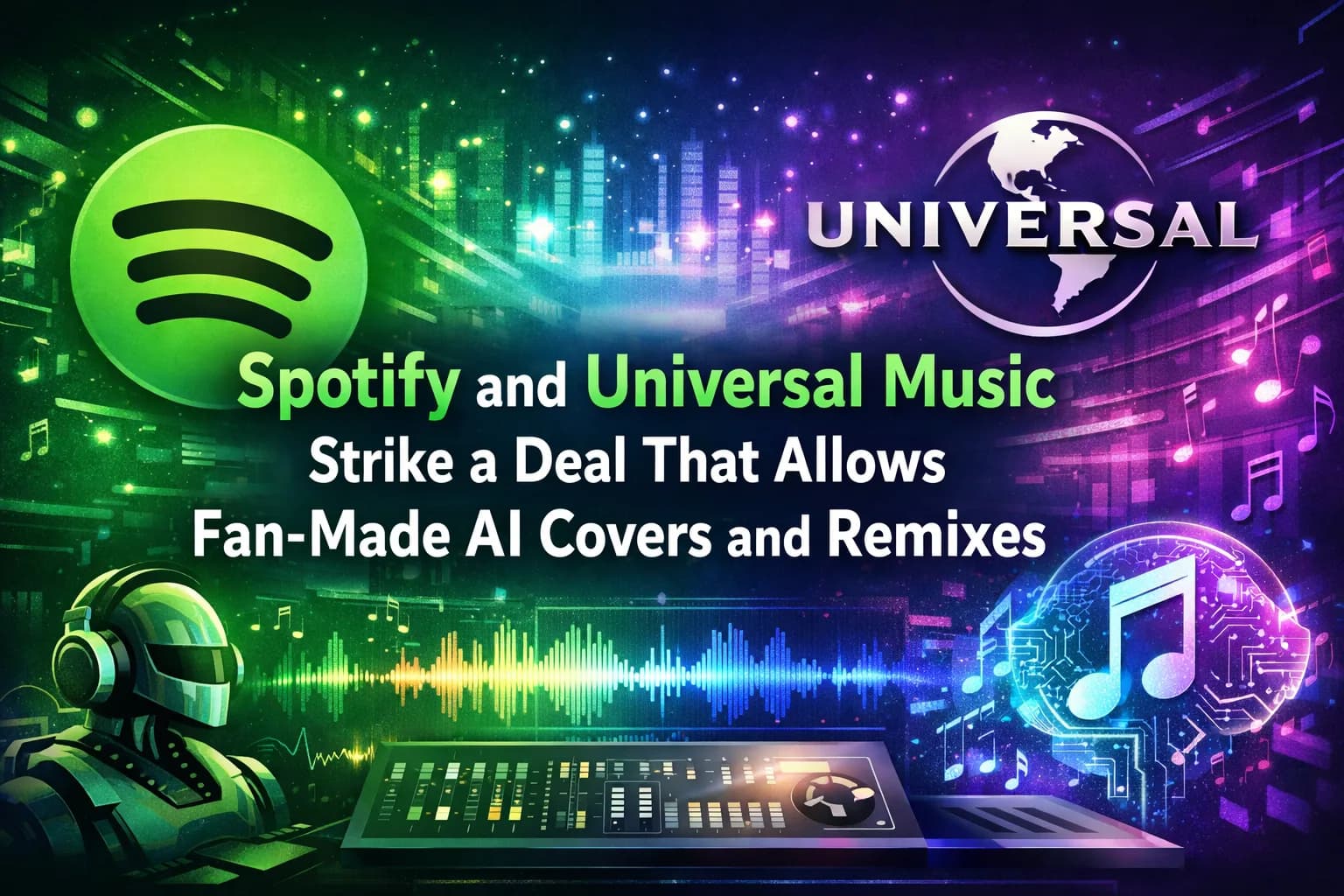
Spotify and Universal Music Strike Deal Allowing Fan-Made AI Covers and Remixes
The music world has seen a groundbreaking development. Spotify and Universal Music strike deal allowing fan-made AI covers and remixes. This collaboration signals a significant shift in how artificial intelligence will integrate with copyrighted music. The agreement aims to unlock new creative avenues for fans and artists alike. It truly reshapes the landscape of digital music. The implications are far-reaching for the entire industry.
This landmark partnership addresses a previously complex and often contentious area. Fan-generated content has long operated in a legal gray zone. Copyright holders frequently issued takedown notices for unauthorized remixes or covers. Now, a clear framework will govern this creative space. This provides both clarity and new opportunities for engagement. It opens up possibilities that were previously unavailable.
Moreover, this deal carries immense weight for the future of music creation and consumption. It acknowledges the growing role of AI tools in artistic expression. Furthermore, it paves the way for licensed innovation. Artists could see new ways to engage their fan base. Fans will also gain official permission to experiment creatively. This agreement sets a powerful precedent for other labels and platforms.

 #Technology #AI #MusicIndustry #SpotifyUMGDeal #GenerativeAI
Unpacking the Agreement: What the Spotify and Universal Music Deal Entails
The core of this agreement centers on official permission. Spotify and Universal Music strike deal allowing fan-made AI covers and remixes under specific licensing terms. This is not a free-for-all for any AI creation. Instead, it establishes a controlled environment. Fans will likely access approved tools and frameworks. These tools will ensure proper attribution and potential revenue sharing. It fosters a responsible approach to AI integration. For instance, details suggest a system where AI-generated content can be created using UMG's extensive catalog. This content will then be hosted on Spotify's platform. The agreement will likely define what constitutes a "fan-made AI cover" versus a fully synthetic, infringing work. Clear guidelines will prove essential here. Both parties seek to protect artist rights while promoting creativity. This balance is delicate yet crucial for widespread acceptance. Therefore, the deal represents a proactive step by two industry giants. They are addressing the rise of generative AI. Instead of resisting the technology, they are seeking to channel its power. They want to create new value within the existing ecosystem. This forward-thinking approach could prevent future legal battles. It also ensures that artists benefit from technological advancements. The entire music community could gain from this structure. Indeed, it signifies a new era.Empowering Creators and Fans with AI-Driven Spotify and Universal Music Collaborations
One primary benefit of this agreement is the empowerment of creators. Hobbyist musicians and producers can now legally experiment with beloved tracks. They can make AI covers and remixes. This legitimizes a passion project for many. It encourages a new wave of creative output. Universal Music's extensive catalog offers an unparalleled resource. Moreover, fans will discover innovative ways to interact with their favorite songs. They can personalize their musical experience. In addition, this framework could foster a vibrant community around AI-assisted music. Developers might create new tools specifically for this licensed environment. Artists could also provide official "stems" or AI models of their voice. This would encourage specific types of fan-made content. It transforms passive consumption into active participation. The creative possibilities are truly immense. This deal pushes the boundaries of engagement.Navigating the Challenges of AI-Generated Content in Music
While the benefits are clear, challenges persist. Integrating AI-generated content raises questions about quality control and artistic intent. Not all AI covers or remixes will meet the same creative standards. There is a need for robust curation processes. Protecting artists' original work remains paramount. The deal must carefully balance innovation with preservation. This involves ongoing discussions and evolving policies. Consequently, distinguishing authorized AI content from illicit deepfakes will be crucial. Bad actors could still exploit AI for unauthorized uses. Spotify and Universal Music must implement strong detection and moderation systems. These systems will prevent misuse and protect artist integrity. The technology behind AI is constantly advancing. Therefore, the regulatory framework must also adapt. This requires constant vigilance from all parties. Still, the overall direction is positive. Furthermore, the ethical implications surrounding AI music are complex. Questions of originality and authorship will inevitably arise. If an AI creates a new melody, who owns it? What about the "likeness" of an artist's voice? These legal and philosophical debates will continue to evolve. This means the Spotify and Universal Music strike deal allowing fan-made AI covers and remixes is just the beginning. It highlights a critical, ongoing conversation. The industry needs to collectively define new boundaries.Industry Precedent: How the Spotify and Universal Music Deal Redefines Digital Music
The collaboration between Spotify and Universal Music sets a powerful precedent. This partnership could reshape how other labels and streaming platforms approach AI. Many have been hesitant to embrace generative AI directly. However, this deal offers a potential roadmap. It demonstrates a path for beneficial integration. Other companies might now explore similar licensing agreements. This could accelerate AI adoption across the entire music ecosystem.- **Licensing Frameworks:** This agreement provides a template for future AI licensing. It addresses critical issues like copyright protection and fair compensation. It creates a structured approach where previously there was none.
- **Artist Empowerment:** Universal Music's artists gain new tools for fan engagement. They can control how their music is used in AI creations. This maintains artistic integrity and opens new revenue streams.
- **Platform Innovation:** Spotify enhances its platform with novel content. It strengthens its position as an industry leader. The platform also offers unique experiences for its users. This differentiates them from competitors.
- **Fan Engagement:** Fans receive official sanction for creative remixes. They move beyond passive listening into active participation. This fosters a deeper connection with artists and music.
- **Industry Standardization:** The deal promotes a degree of standardization. It brings clarity to a previously unregulated area. This benefits creators, consumers, and rights holders alike.
Financial and Market Implications of the AI Collaboration
The financial implications of this deal are substantial for both Spotify and Universal Music. New revenue streams will emerge from licensed AI content. This includes potential subscription tiers or royalty splits on fan-made creations. Universal Music, with its vast catalog, stands to gain significantly. It can monetize content that was previously difficult to control. This creates an entirely new revenue channel. Spotify, in turn, gains exclusive, innovative content. This can attract and retain subscribers. It reinforces its market position. For example, if the model proves successful, it could encourage more users to subscribe to Spotify. It might also incentivize artists to sign with UMG. They would gain access to this forward-thinking framework. The deal could also open doors for new business models. Imagine official AI collaboration tools offered as a premium service. This represents a substantial market opportunity. Many industry observers at Forbes are already discussing these possibilities. They are tracking the unfolding impact. Meanwhile, the competitive landscape will certainly shift. Other major labels and streaming services will feel pressure to respond. They cannot afford to be left behind in the AI revolution. They might pursue similar partnerships. Alternatively, they could develop their own proprietary AI content strategies. This means a rapid acceleration of AI integration across the entire music industry. Experts at Reuters have highlighted the competitive urgency this creates. This push for innovation will benefit consumers overall. Indeed, competition drives progress. Ultimately, this strategic alliance positions both Spotify and Universal Music at the forefront of digital innovation. They are not merely adapting to change. They are actively shaping the future of music consumption and creation. The financial gains from new content and increased engagement will be closely monitored. This pioneering approach offers valuable insights for the broader entertainment sector. It shows how technology and tradition can coalesce effectively. They are building a pathway forward.Conclusion: The Future Shaped by Spotify and Universal Music's AI Deal
The announcement that Spotify and Universal Music strike deal allowing fan-made AI covers and remixes marks a pivotal moment. It represents a significant step forward for the entire music industry. This collaboration validates the potential of generative AI. It also establishes a framework for its responsible use. The deal signals a shift from resistance to integration. It creates new opportunities for artists, fans, and platforms alike. This is a truly transformative development. This partnership has the potential to usher in a new era of creative collaboration. It can also unlock unforeseen commercial possibilities. We can expect to see a surge in innovative, AI-assisted content. This will enrich the digital music experience for everyone. To stay updated on these cutting-edge developments, you can find more information about the intersection of technology and entertainment on TechPerByte's latest tech news. We cover emerging trends comprehensively. Furthermore, this groundbreaking agreement serves as a blueprint for the future. It demonstrates how traditional industries can adapt to technological disruption. By embracing AI, Spotify and Universal Music are not just safeguarding their futures. They are actively building a more dynamic and interactive music ecosystem. The implications for intellectual property and artist rights will continue to evolve. For further insights into how technology is reshaping industries, check out More tech coverage at TechPerByte. We explore these critical shifts in depth.
#Technology #AI #MusicIndustry #SpotifyUMGDeal #GenerativeAI