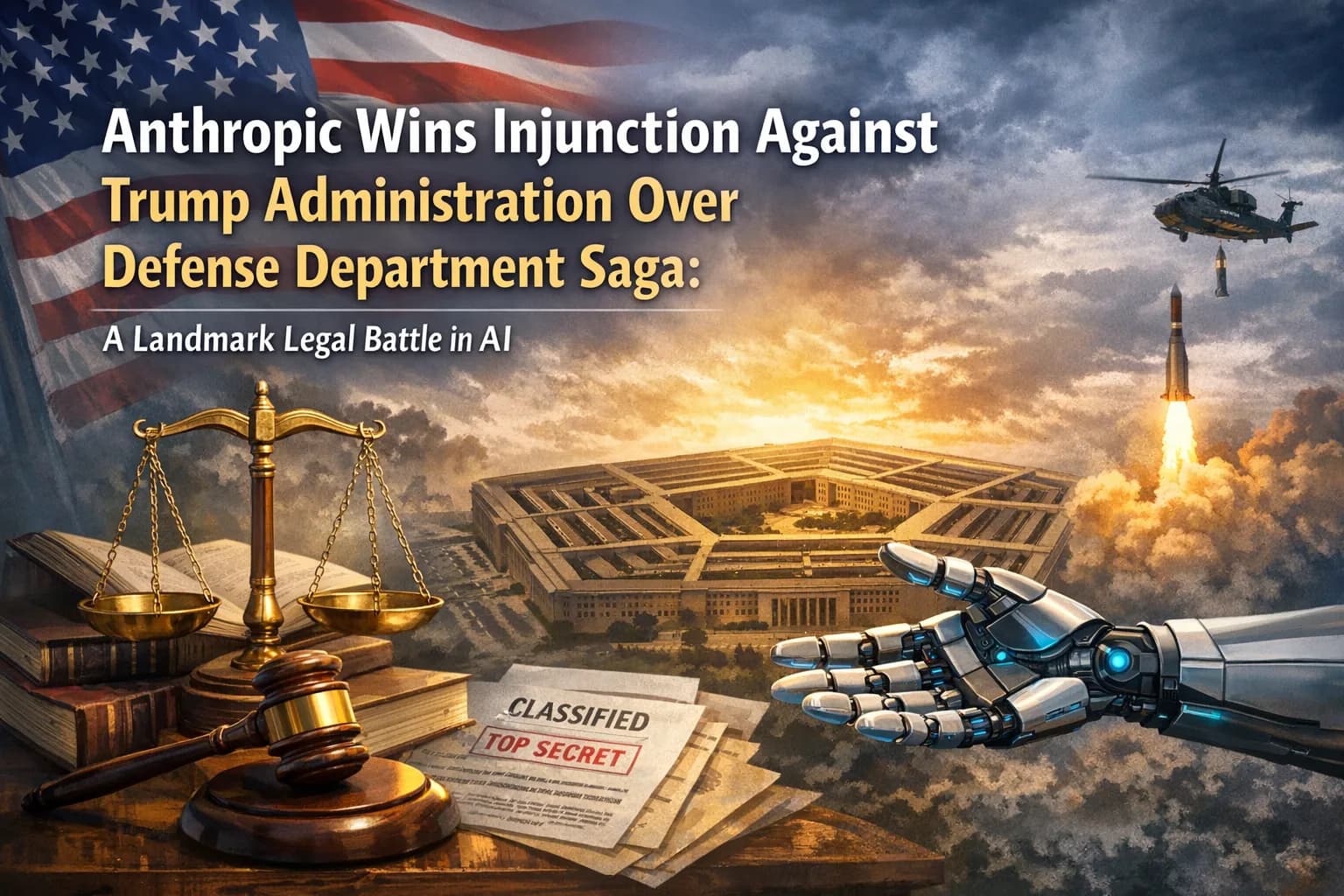
Anthropic Wins Injunction Against Trump Administration Over DOD Dispute
In a significant development that underscores the evolving relationship between cutting-edge artificial intelligence firms and government entities, a federal court has ruled in favor of Anthropic, granting a critical injunction against the Trump administration. This pivotal decision in the ongoing **Anthropic wins injunction against Trump administration over Defense Department saga** marks a crucial moment for the AI industry, setting a precedent for how legal disputes involving advanced technology and national security might unfold. The injunction provides immediate relief to Anthropic, a leading AI research company, pausing actions by the Defense Department that the company argued were detrimental to its operations and contractual obligations.
The legal battle, shrouded in considerable intrigue due to its national security implications, highlights the complex interplay between innovation, government oversight, and contractual integrity. Anthropic’s move to secure an injunction indicates a determined effort to protect its interests and ensure fair dealings, especially when collaborating on projects with profound strategic importance. Understanding the nuances of this ruling requires a deeper dive into what an injunction entails, the specific nature of the dispute, and its broader impact on the tech landscape.


Unpacking the Injunction: What Does This Mean for Anthropic?
An injunction, in legal terms, is a judicial order requiring a party to do or refrain from doing a specific act. In this instance, the injunction granted to Anthropic against the Trump administration means the Defense Department is legally compelled to cease or reverse certain actions that were at the heart of the dispute. While the exact details of the contentious issue remain largely confidential, it is widely speculated to involve a significant contract related to AI model development, data access, or the deployment of Anthropic's advanced AI systems for defense applications. For Anthropic, this injunction is more than just a procedural victory; it represents a critical safeguard. It protects the company from immediate harm, potentially preventing the loss of intellectual property, disruption of ongoing research, or financial penalties stemming from the government's contested actions. This ruling underscores the judiciary's role in mediating disputes even at the highest levels of government and technology, ensuring that even powerful administrations are held accountable to legal frameworks. The **Anthropic wins injunction against Trump administration over Defense Department saga** demonstrates that the courts are prepared to intervene when contractual or procedural fairness is questioned by leading tech innovators. Sources familiar with government procurement processes suggest that disputes often arise from changes in administration priorities, interpretations of contract clauses, or disagreements over data ownership and usage rights, especially with sensitive AI technologies. This legal outcome provides Anthropic with leverage, allowing them to continue their work without the immediate threat of adverse governmental action. It sends a clear message that AI firms are prepared to defend their ground vigorously in legal arenas.
The Genesis of the Dispute: A Defense Department Saga Unveiled
The core of this high-stakes legal confrontation, where **Anthropic wins injunction against Trump administration over Defense Department saga**, appears to stem from a complex engagement between Anthropic and the Pentagon. While specifics are under wraps, industry observers suggest the disagreement likely revolves around a highly sensitive project involving advanced AI applications for national security. Such projects often involve immense intellectual property, proprietary algorithms, and access to classified data, making any dispute incredibly high stakes. Possible flashpoints could include:- Contractual Reinterpretation: A change in administration or departmental leadership might have led to a reinterpretation of existing contract terms, particularly concerning deliverables, timelines, or financial arrangements.
- Data Access and Control: Disputes over the scope of data access granted to Anthropic, or the control over AI models trained on sensitive military data, could easily escalate.
- Ethical and Safety Concerns: As AI applications in defense raise profound ethical questions, there might have been a disagreement on the safety protocols, transparency, or potential dual-use aspects of Anthropic's technology.
- Procurement Challenges: Competing interests or external pressures could have led the Trump administration to challenge the initial procurement process or seek to modify the terms in a manner unfavorable to Anthropic.
Broader Implications for AI and Government Collaboration
The outcome of this injunction has far-reaching implications that extend beyond Anthropic and the Trump administration. It sets a precedent for how AI companies might navigate future partnerships with government bodies, particularly in defense and national security sectors. The legal victory for Anthropic could embolden other tech firms to challenge governmental actions they deem unfair or arbitrary, fostering a more assertive stance from the private sector. For one, this event underscores the need for crystal-clear contractual agreements when dealing with cutting-edge AI. Ambiguities can lead to costly and time-consuming legal battles. Furthermore, it highlights the inherent tension between the fast-paced, innovative culture of tech companies and the often bureaucratic, security-focused environment of government agencies. As TechCrunch often reports, the intersection of technology and policy is fraught with challenges. Moreover, the case involving how **Anthropic wins injunction against Trump administration over Defense Department saga** could influence future legislation or policy reforms aimed at streamlining government procurement of advanced technologies. There's an ongoing debate about how to balance national security interests with the protection of intellectual property and fostering innovation. This injunction brings that debate into sharper focus, urging policymakers to consider more robust frameworks that can withstand changes in political leadership. Companies like Anthropic are at the forefront of AI development, creating powerful models that could revolutionize various sectors, including defense. The ability to secure legal remedies against governmental overreach is critical for these companies to operate confidently and continue their vital research. This particular legal episode will undoubtedly be studied closely by legal scholars, policymakers, and industry executives alike, seeking lessons on effective collaboration and conflict resolution in the age of AI.
The Road Ahead: What's Next in the Anthropic-DoD Dispute?
While the injunction provides Anthropic with immediate relief, it is crucial to understand that this is likely not the final chapter in the **Anthropic wins injunction against Trump administration over Defense Department saga**. An injunction is often a temporary measure, designed to prevent irreparable harm while the underlying legal merits of the case are fully deliberated. This could lead to a variety of next steps:- Negotiated Settlement: Both parties might engage in renewed negotiations, aiming to reach an out-of-court settlement that addresses their respective concerns without prolonged litigation.
- Further Litigation: If a settlement isn't reached, the case could proceed to a full trial, where the court would thoroughly examine all evidence and arguments to render a final judgment.
- Appeals: Whichever party ultimately loses in the lower courts could choose to appeal the decision, prolonging the legal process significantly.
- Policy Re-evaluation: The legal proceedings could prompt the Department of Defense, or even Congress, to re-evaluate policies regarding AI procurement and collaboration with private tech firms.