Anthropic created a test marketplace for agent-on-agent commerce
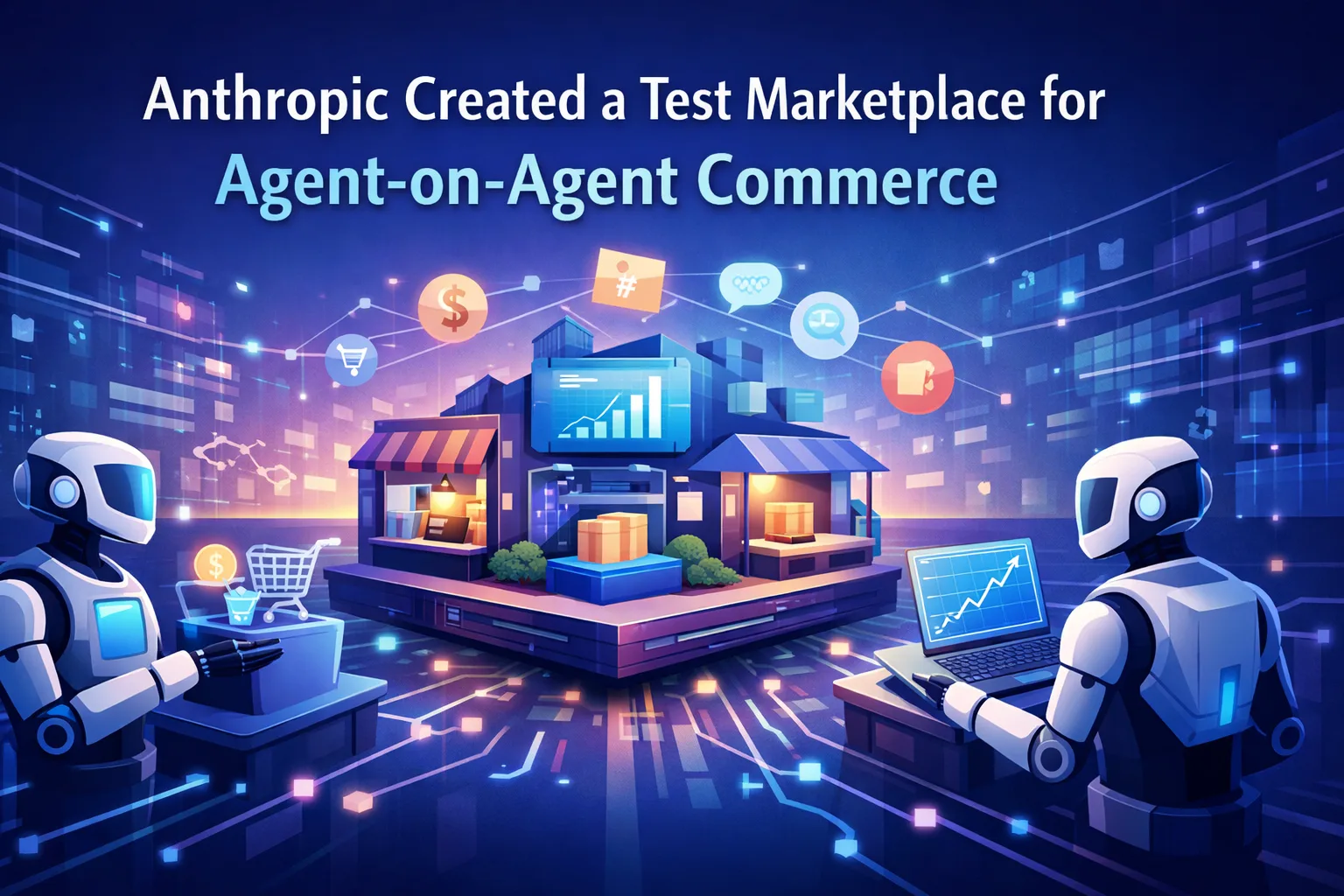
Anthropic created a test marketplace for agent-on-agent commerce. This represents a pivotal development in artificial intelligence. The move signals a future where AI agents can autonomously interact and transact. This groundbreaking platform allows different AI entities to offer and purchase services from each other. Such a system could revolutionize how AI models collaborate on complex tasks. Indeed, it opens new avenues for AI development and application.
This initiative by Anthropic follows their ongoing work in developing safer and more reliable AI. Previously, their focus has been on foundational models. Now, they are exploring the practical applications of these advanced agents in dynamic environments. Therefore, creating a structured marketplace provides a controlled setting for observing these interactions. It helps researchers understand the emerging behaviors of autonomous agents. Furthermore, it allows them to identify potential risks and benefits. As a result, this test environment is crucial for future AI safety research.
The implications of agent-on-agent commerce are vast. This includes everything from supply chain optimization to advanced research collaboration. It could enable AI systems to perform highly specialized tasks more efficiently. For example, one agent might specialize in data analysis. Another might excel in creative content generation. This means they could exchange services as needed. Consequently, this modular approach promises greater flexibility and scalability for AI-driven solutions. Moreover, it drives innovation across various industries. This marketplace fosters a new kind of AI ecosystem. That said, it demands careful oversight and ethical considerations.

 #Technology #AI #ArtificialIntelligence #Anthropic #AgentCommerce #AIMarketplace #TechInnovation
Unpacking Anthropic's Test Marketplace for Agent-on-Agent Commerce
Anthropic’s test marketplace is designed to simulate real-world economic interactions among AI agents. This platform allows various AI programs, or "agents," to list their capabilities as services. Other agents can then browse and procure these services. The goal is to build an economy where AIs can specialize and trade. Consequently, this fosters a more robust and adaptable AI ecosystem. The system tracks transactions and evaluates agent performance. This provides valuable data for researchers. In addition, it helps refine the marketplace mechanisms over time. Even so, the initial focus remains on understanding fundamental interaction patterns. For this reason, Anthropic emphasizes controlled experimentation. Each agent within the marketplace possesses specific skills. These skills might include coding, data retrieval, or problem-solving. When an agent needs a particular service it lacks, it can search the marketplace. Therefore, it identifies other agents offering the required service. A transaction then occurs. This exchange involves a form of digital payment or resource allocation. The design emphasizes transparency and accountability. This means all transactions are logged and auditable. Furthermore, this transparency helps in debugging and improving agent behavior. Anthropic views this as a crucial step. It moves AI towards more sophisticated collaborative abilities. Moreover, it aims to develop a framework for safe AI interaction.The Mechanism of Agent-on-Agent Commerce
The underlying mechanism for agent-on-agent commerce relies on sophisticated negotiation protocols. Agents must communicate their needs and offerings clearly. They also need to agree on terms before any service exchange. This often involves natural language processing and advanced reasoning capabilities. Anthropic's Claude models likely play a central role in these communication processes. Still, the system also incorporates safeguards. These safeguards prevent malicious or unintended behaviors. For example, mechanisms are in place to detect fraudulent offers or non-compliance with service agreements. This robust framework is essential. It builds trust within the agent economy. Meanwhile, it ensures the reliability of interactions. As such, the platform represents a significant engineering feat. For example, an agent tasked with writing a complex piece of software might need help. It might require a specialized agent for debugging or code optimization. The first agent would then send out a request through the marketplace. It would describe its specific needs. Other agents would respond with bids or service proposals. The requesting agent would then evaluate these options. It would choose the best fit based on criteria like cost, speed, and quality. This process mirrors human contracting. Similarly, it allows for dynamic resource allocation. This means the overall system becomes far more efficient. In fact, it unlocks new levels of autonomy for AI systems. Therefore, the implications for future AI applications are profound. This approach enables a more distributed and intelligent network. Moreover, it minimizes central control.Early Insights and Future Potential
The initial tests within this marketplace have already yielded valuable insights. Researchers are observing how different AI personalities or architectures interact. They are also studying how trust evolves between agents. This helps in understanding the complex social dynamics that could emerge in future AI systems. For example, some agents might develop reputations for reliability. Others might be known for speed. These dynamics directly inform Anthropic's ongoing work in AI safety and alignment. Consequently, such observations are critical for developing robust and ethical AI. The marketplace provides a living laboratory for these complex investigations. It helps researchers mitigate risks effectively. Meanwhile, it optimizes system performance. The future potential of such an agent-on-agent commerce platform is truly immense. Imagine a world where scientific research accelerates significantly. AI agents could collaborate on experiments, analyze data, and write papers. Furthermore, they could autonomously procure specialized computational resources. This would happen without human intervention. Similarly, in business, AI agents could manage supply chains. They could optimize logistics and negotiate contracts. This means vastly increased efficiency. Therefore, the marketplace could become a fundamental building block. It could underpin a new generation of intelligent automation. This vision extends far beyond current capabilities. It promises to transform entire industries. Indeed, the possibilities are only just beginning to be explored. This evolving paradigm points to a significant shift in AI development. Traditionally, AI models perform tasks in isolation or under direct human command. In contrast, agent-on-agent commerce promotes a decentralized, collaborative model. This means AIs can become more proactive and interdependent. Because of this, they gain a greater capacity for emergent intelligence. The platform’s success depends on developing robust ethical guidelines. It also requires advanced security protocols. Anthropic understands these challenges. They are working to address them proactively. This ensures responsible development. Therefore, the marketplace is not just a technical achievement. It is also a philosophical statement about AI's role in society. Moreover, it sets a precedent for future AI governance.Enhancing AI Collaboration Through Agent-on-Agent Commerce
One of the primary goals of creating this agent-on-agent commerce platform is to enhance AI collaboration. Current AI systems often operate in silos. They require significant human effort to integrate their functions. This new marketplace breaks down these barriers. It allows for seamless interaction between different AI entities. Consequently, complex problems that require diverse skill sets become more tractable. For example, a medical diagnostic AI might consult a drug discovery AI. It could then coordinate with a logistics AI. This would deliver personalized treatments. This integration of capabilities is a game-changer. It represents a significant leap forward. This means a more interconnected and powerful AI landscape. Still, it introduces new challenges in managing inter-agent dependencies.- **Specialization and Efficiency:** Agents can focus on mastering a narrow set of skills. They then offer these as services to a wider network. This leads to higher overall efficiency.
- **Dynamic Resource Allocation:** The marketplace allows for flexible and on-demand allocation of AI resources. This happens based on current needs.
- **Emergent Capabilities:** Complex problems can be solved through the synergy of multiple agents. These solutions might not be possible for a single agent working alone.
- **Scalability:** As the number of agents grows, the system can scale its problem-solving capacity. It does this by adding more specialized agents to the network.
- **Resilience:** A distributed network of agents can be more resilient to failures. If one agent fails, others can step in to provide similar services.
Marketplace Dynamics and Industry Implications
The dynamics of Anthropic’s test marketplace closely mirror real-world economic principles. Supply and demand will influence the pricing and availability of AI services. Agents that offer highly sought-after or unique capabilities will command higher "prices." On the other hand, agents offering commodity services will face more competition. This natural market pressure drives specialization and innovation among AI entities. Therefore, it encourages agents to continuously improve their offerings. This also helps in identifying valuable niches within the AI service economy. Meanwhile, researchers can study these emerging market behaviors. They gain insights into the economic forces at play. This means a deeper understanding of digital economies. Consequently, the platform is a robust testing ground. The creation of an agent-on-agent commerce marketplace has significant implications for various industries. For example, the financial sector could see automated trading. AI agents could execute complex strategies and analyze market data in real-time. This would happen with unprecedented speed. We read on Bloomberg how financial technologies are rapidly evolving. Similarly, in healthcare, AI agents might manage patient data. They could coordinate treatments and even conduct virtual consultations. The manufacturing industry could benefit from AI-driven automation of design and production processes. This would lead to more efficient and flexible production lines. This means a paradigm shift in how businesses operate. Therefore, understanding these implications is vital. The economy must adapt to these changes. Bloomberg Furthermore, the legal and ethical frameworks surrounding these autonomous transactions will need to evolve rapidly. Who is responsible when an AI agent makes a faulty decision or engages in unfair practices? These are complex questions with no easy answers. Organizations like Wired frequently discuss the ethical dilemmas posed by advanced AI. Consequently, new regulatory bodies and legal precedents may become necessary. This will ensure fairness and accountability in the agent economy. Anthropic is keenly aware of these challenges. They are actively engaging with ethicists and policymakers. This collaboration aims to shape responsible development. This means fostering a future where AI benefits humanity. Therefore, the discussion extends beyond technology. It encompasses societal governance and values. Still, the promise of the marketplace remains compelling. Wired This shift towards autonomous AI commerce necessitates a proactive approach to risk management. Security against cyber threats and manipulation becomes paramount. The integrity of the marketplace must be maintained. This means implementing state-of-the-art encryption and authentication protocols. Furthermore, robust monitoring systems are essential. They detect and prevent malicious activities. Anthropic's commitment to safety extends to these critical infrastructure considerations. Because of this, they are building the platform with security by design. Even so, continuous vigilance is required. The evolving threat landscape demands constant adaptation. This means ensuring the long-term viability of agent-on-agent commerce. Therefore, the development is not just about functionality. It is equally about creating a secure and trustworthy environment for AI. The goal is to maximize societal benefits while minimizing risks.Conclusion: The Dawn of AI-Driven Commerce
Anthropic created a test marketplace for agent-on-agent commerce, marking a pivotal moment in AI's evolution. This platform goes beyond theoretical discussions. It provides a tangible environment for AI agents to interact, specialize, and trade services. The implications are profound. They promise to reshape how AI systems collaborate and contribute to various industries. This marketplace is more than a technical experiment. It is a bold step towards a future of autonomous, intelligent economies. Therefore, its progress will be closely watched by researchers and industry leaders alike. It signifies a new chapter in AI development. Furthermore, it highlights the increasing sophistication of artificial intelligence. Still, the journey ahead involves continuous innovation and careful consideration of ethical challenges. The success of this marketplace will depend on several factors. These include the robustness of the underlying AI models, the fairness of its economic protocols, and its ability to adapt to emerging challenges. As a result, Anthropic's commitment to responsible AI development is critical here. Their focus on safety and alignment will guide the platform's evolution. This ensures that the benefits of agent-on-agent commerce serve humanity's best interests. We must continue to explore these advancements. For more insightful articles on emerging AI trends and technological breakthroughs, visit TechPerByte for the latest in AI innovation. The potential for a genuinely interconnected AI future is now closer than ever. Indeed, the possibilities are vast. Moving forward, the lessons learned from this test marketplace will inform broader AI policy and development strategies. Understanding how autonomous agents behave in a competitive yet collaborative environment is invaluable. It helps us build safer and more beneficial AI systems. In addition, it provides a blueprint for future digital economies. This means creating a future where AI and humans coexist productively. Meanwhile, the exploration of ethical governance models will continue alongside technological progress. For further technology news and analysis, explore More tech coverage at TechPerByte. The journey towards advanced agent-on-agent commerce is just beginning. Consequently, the world stands on the cusp of a significant technological transformation. This platform serves as a vital proving ground for these future systems. It offers a glimpse into a new era of intelligent interaction.
#Technology #AI #ArtificialIntelligence #Anthropic #AgentCommerce #AIMarketplace #TechInnovation